
Scroll down for Jellyfish club Resources

Welcome to Jellyfish Club
The Jellyfish Club was created to help children understand that they are not alone in how they feel. The idea grew from a simple but powerful symbol used in a therapeutic setting — the jellyfish — which came to represent moments when emotions feel wobbly, overwhelming, or hard to explain. The author wanted children to have a gentle, recognisable image they could connect with, something that quietly says, “It’s okay to feel like this, and you are not the only one.”
Born from real conversations with children and young people in therapy, the Jellyfish Club developed as a way of making emotional wellbeing feel safe, approachable and free from stigma. Many children struggle to find words for anxiety, big feelings or self-doubt, and the jellyfish became a friendly way to open those conversations, helping children recognise their feelings without fear or shame.
At its heart, the Jellyfish Club is about giving children practical tools they can use in everyday life. The aim is to share simple, accessible mental health strategies that support self-regulation, confidence and resilience, whether a child is at home, at school or simply navigating a difficult moment. I believe that every child deserves access to supportive resources, regardless of circumstance, and the Jellyfish Club was created with a strong desire to provide free mental health tools that children and families can use together.
Through stories, illustrations and gentle therapeutic ideas woven into everyday situations, the Jellyfish Club hopes to remind children that feeling wobbly is part of being human, and that with kindness, understanding and a little practice, they can learn to find calm, courage and connection within themselves.
Jellyfish Club
✳︎
Free Resources
✳︎
For Children
✳︎
Parents
✳︎
Jellyfish Club ✳︎ Free Resources ✳︎ For Children ✳︎ Parents ✳︎
Jellyfish Club Resources for Children are a collection of gentle, child-friendly wellbeing tools designed to help children understand their feelings, build emotional awareness and develop simple strategies to manage big emotions. Created within a therapeutic setting, these resources use clear language, calming visuals and playful storytelling to make emotional wellbeing feel safe, approachable and easy to understand.
The resources are designed to support children who may experience anxiety, worry, low confidence, overwhelm or emotional “wobbles.” Each tool encourages children to pause, notice how they feel and practise practical skills such as breathing, grounding, self-soothing and positive self-talk. Rather than focusing on problems, the emphasis is on helping children feel supported, capable and understood.
Jellyfish Club resources include printable activity sheets, calming strategies, feelings check-ins, visual guides, simple exercises and story-based materials that can be used at home, in schools or in therapeutic environments. They are suitable for use alongside adults, including parents, carers, teachers and therapists, to help open conversations about emotions in a gentle and non-judgemental way.
At the heart of the Jellyfish Club is the idea that no child should feel alone in their experiences. The jellyfish symbol acts as a reassuring reminder that it is okay to feel wobbly sometimes, and that with the right tools and support, children can learn to feel calmer, more confident and more connected to themselves and others.
These resources were created with a strong commitment to accessibility, with the aim of providing free or low-cost mental health tools that children and families can return to whenever they need a little extra support.
Click the pictures below for downloadable PDF
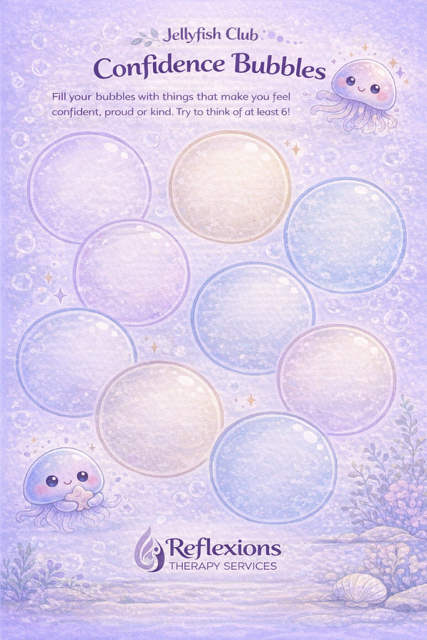
The Confidence Bubble Sheet is a simple, child-friendly resource designed to help children recognise, explore and build their confidence in a gentle and supportive way. It encourages children to notice their strengths, achievements, positive qualities and moments when they have been brave, even if those moments feel small. The aim is to help children develop a more balanced and compassionate view of themselves, particularly if they tend to focus on worries or self-doubt.
Each bubble represents a space where a child can write, draw or describe something positive about themselves. This might include things they are good at, kind things others have said, challenges they have overcome, skills they are learning, or moments when they felt proud. The sheet can be completed independently, with a parent, or alongside a professional, depending on the child’s age and needs.
To use the sheet, invite the child to fill in one or two bubbles at a time rather than completing it all at once. This keeps the activity manageable and reduces pressure. Adults can support by offering gentle prompts such as “What are you proud of today?”, “What was something you found hard but still did?”, or “What would a friend say is special about you?” If a child struggles to think of ideas, adults can model examples or suggest options without taking over.
The Confidence Bubble Sheet works well as a regular check-in tool. It can be revisited weekly or after positive experiences to help reinforce progress and build emotional resilience over time. Children may also find it helpful to look back at their completed bubbles during moments of anxiety or low mood as a reminder of their strengths and capabilities.
The focus is not on perfection or performance, but on helping children notice growth, effort and self-belief in a safe, encouraging way.
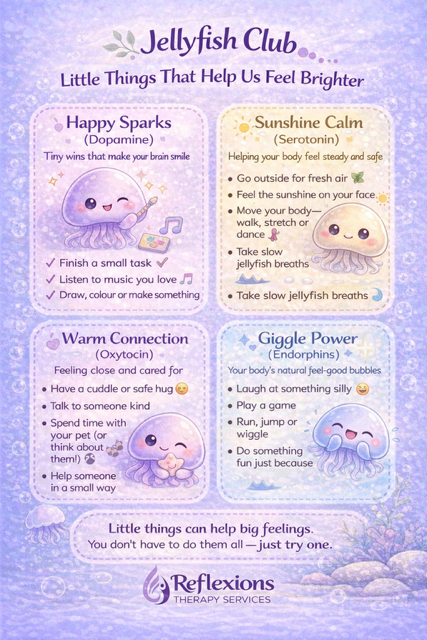
The Little Things That Help Me Feel Better sheet is a gentle, child-friendly resource designed to help children identify simple, healthy strategies that support their emotional wellbeing. It encourages children to notice what helps them feel calmer, safer or more comfortable when they are upset, worried, angry or overwhelmed. The aim is to build self-awareness and give children a personalised set of coping tools they can use in everyday life.
The sheet provides space for children to write or draw small activities, people, places or sensory experiences that help them feel better. These might include things such as cuddling a pet, listening to music, having quiet time, going for a walk, drawing, using breathing techniques, talking to someone they trust, or spending time in a favourite space. The focus is on simple, realistic strategies that are easy to access when needed.
To use the sheet, invite the child to think about times when they have felt better after a difficult moment and explore what helped. Adults can support with gentle prompts such as “What helps your body feel calm?”, “What helps when your brain feels busy?”, or “What do you like to do when you need a break?” Children can complete the sheet gradually, adding ideas over time as they discover new things that work for them.
This resource can be used at home, in school or in therapeutic settings. It works well as part of regular emotional check-ins and can be kept somewhere visible so the child can refer to it when they are struggling. Adults may also use it to better understand the child’s preferences and to support them in using their chosen strategies.
The purpose of the sheet is not to remove difficult feelings, but to help children learn that they have safe, manageable ways to support themselves and that small actions can make a meaningful difference to how they feel.
Square Breathing is a simple, calming breathing technique designed to help children slow their breathing, settle their body and feel more in control when emotions feel big or overwhelming. It is often used to support anxiety, stress, anger or moments of worry by helping the nervous system move from a state of alertness into a calmer, more regulated state.
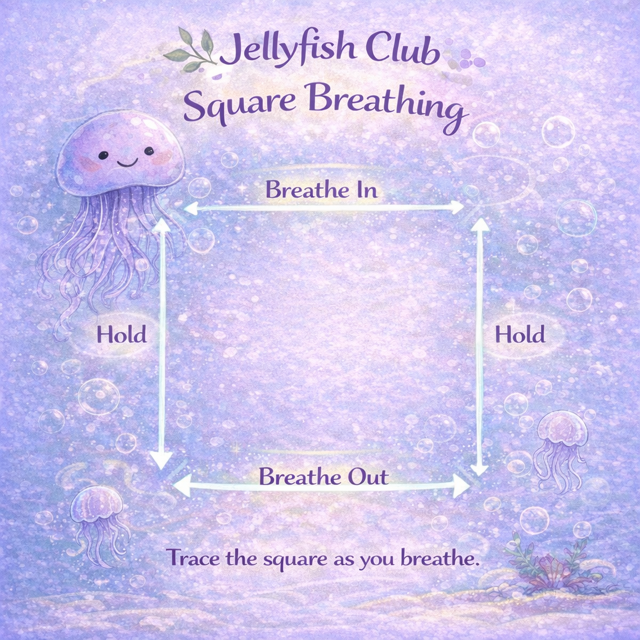
The technique is called square breathing because the breath follows four equal steps, like the four sides of a square. Children breathe in for a count of four, hold for a count of four, breathe out for a count of four, and then pause for a count of four before starting again. The steady rhythm helps create a sense of safety and predictability, which can reduce feelings of panic or tension.
To use the sheet, encourage the child to trace around the square with their finger or follow the visual prompts as they breathe. As they move along one side of the square, they breathe in; at the corner they pause; along the next side they breathe out; and at the final corner they pause again. Repeating this cycle for a few rounds can help the child feel calmer and more focused. Younger children may find it helpful to count aloud or imagine slowly drawing the square in the air.
Square breathing can be practised when the child is already calm so that it becomes familiar and easier to use during difficult moments. It can also be used before tests, at bedtime, after an argument, or whenever the child notices their body feeling tense or their thoughts racing. Adults can model the breathing alongside the child to provide reassurance and co-regulation.
The aim of square breathing is not to stop feelings, but to give children a practical tool they can use to help their body feel safe and settled, making it easier to think clearly and cope with challenges.
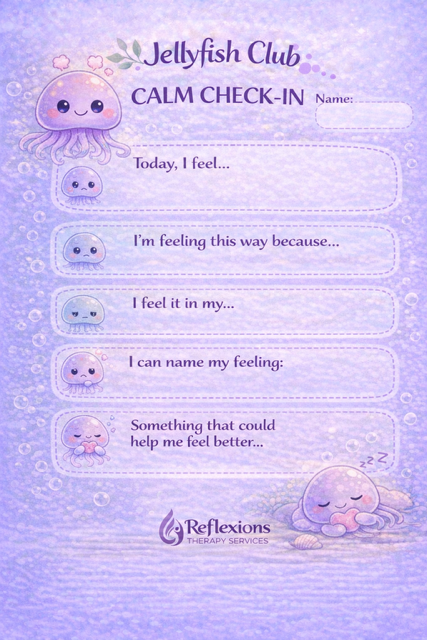
The Calm Check-In resource is a gentle, child-friendly tool designed to help children pause, notice how they are feeling, and identify what they need in the moment. It supports emotional awareness by encouraging children to tune into their thoughts, feelings and body sensations in a simple, structured way. The aim is to help children recognise their emotional state early and choose supportive strategies before feelings become overwhelming.
The resource guides children through a short check-in process, helping them to notice how calm or unsettled they feel, what emotions are present, and what their body might be telling them. It may include prompts such as noticing breathing, energy levels, thoughts or physical sensations. By slowing down and checking in with themselves, children begin to build emotional literacy and a stronger sense of self-understanding.
To use the sheet, invite the child to complete the check-in at a calm moment first so they become familiar with the process. They can then use it during times of stress, after a difficult experience, or as part of a daily routine at home, school or in therapy. Adults can support by asking gentle, open questions such as “What is your body telling you right now?” or “What do you think you need to feel a little calmer?” The focus should be on curiosity rather than judgement.
The Calm Check-In resource works well as a regular emotional regulation tool and can help children notice patterns over time, such as triggers or activities that help them feel more settled. It can also support conversations between children and trusted adults by giving them a clear way to express how they are feeling.
The purpose of the Calm Check-In is not to change or fix emotions, but to help children develop the skill of noticing and understanding their internal experiences, so they can respond to themselves with more confidence and care.
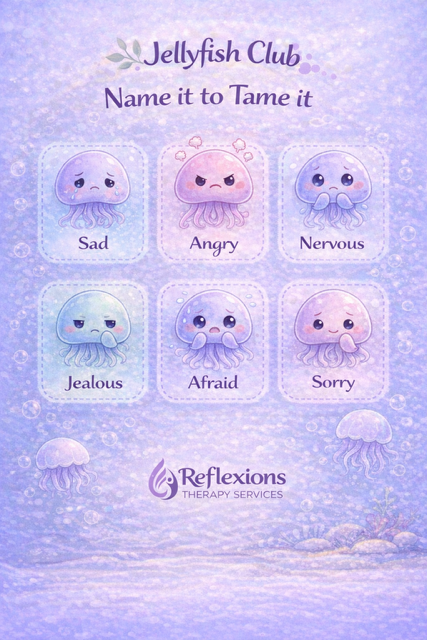
The Name It to Tame It resource is a child-friendly tool designed to help children recognise and label their emotions in a safe and supportive way. The idea behind the activity is that when children are able to identify and name what they are feeling, those emotions often become less overwhelming and easier to manage. Putting feelings into words helps the brain make sense of experiences and supports emotional regulation.
The resource encourages children to pause and notice what is happening inside them, then choose words that best describe their emotions. This might include feelings such as worried, angry, sad, frustrated, excited or confused. Some children may find it easier to point to pictures, colours or feeling words rather than explain in full sentences, which is completely acceptable. The focus is on helping children recognise that all feelings are valid and that emotions can change.
To use the sheet, invite the child to think about how they are feeling right now or to reflect on a recent situation. Adults can support by offering gentle prompts such as “What feeling fits best?”, “Where do you feel that in your body?”, or “If your feeling had a name, what would it be?” Once the feeling is named, the child can be encouraged to think about what might help next, such as using a calming strategy or asking for support.
This resource can be used during emotional moments, as part of regular check-ins, or after an event when the child is calm enough to reflect. Over time, it helps children build emotional vocabulary, improve communication and develop confidence in expressing their needs.
The aim of Name It to Tame It is not to make difficult feelings disappear, but to help children understand that emotions are manageable and that recognising and naming them is an important first step in feeling calmer and more in control.
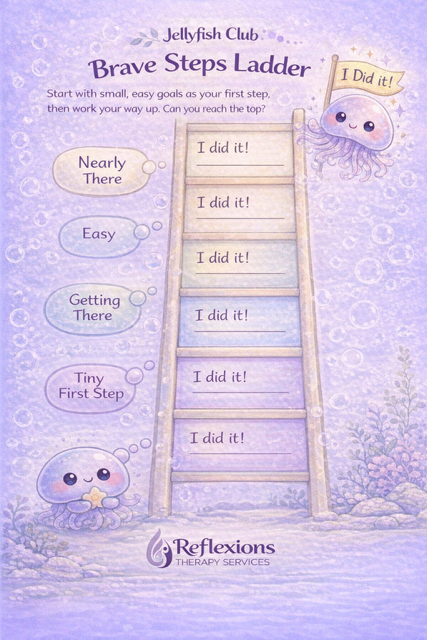
The Brave Steps Ladder is a supportive, child-friendly resource designed to help children face worries or challenges in small, manageable stages. It is based on the idea that confidence grows gradually when children take gentle steps towards something that feels difficult, rather than trying to overcome it all at once. The aim is to reduce fear and build resilience by focusing on progress, not perfection.
The ladder is made up of small steps, each representing a manageable action that moves the child closer to their goal. These steps begin with something that feels only slightly challenging and gradually build towards the bigger goal as the child’s confidence increases. This approach helps children experience success along the way and prevents them from feeling overwhelmed.
To use the sheet, start by helping the child identify one specific goal or situation they would like to feel braver about, such as speaking in class, sleeping in their own room, trying a new activity or attending a social event. Together, break the goal down into smaller steps, writing one step on each part of the ladder. Adults can support by helping the child choose steps that feel realistic and achievable, and by celebrating each success, no matter how small.
Children can move up the ladder at their own pace, repeating steps as often as needed before moving on. It can be helpful to check in regularly, reflect on how each step felt, and adjust the ladder if needed. Praise should focus on effort and courage rather than outcomes, reinforcing the idea that trying is what matters.
The Brave Steps Ladder is not about pushing children too quickly, but about helping them learn that bravery grows through small, safe experiences. Over time, it helps children develop confidence, problem-solving skills and a stronger belief in their ability to cope with challenges.